
New findings from Harvard’s Opportunity Insights show that families in HOPE VI revitalization sites experience significantly improved long-term outcomes when comprehensive community programs are present.
For nearly 50 years, Urban Strategies, Inc. (USI) has partnered with housing authorities, municipalities, and community organizations to ensure revitalization efforts support not only physical transformation, but long-term family stability and opportunity.
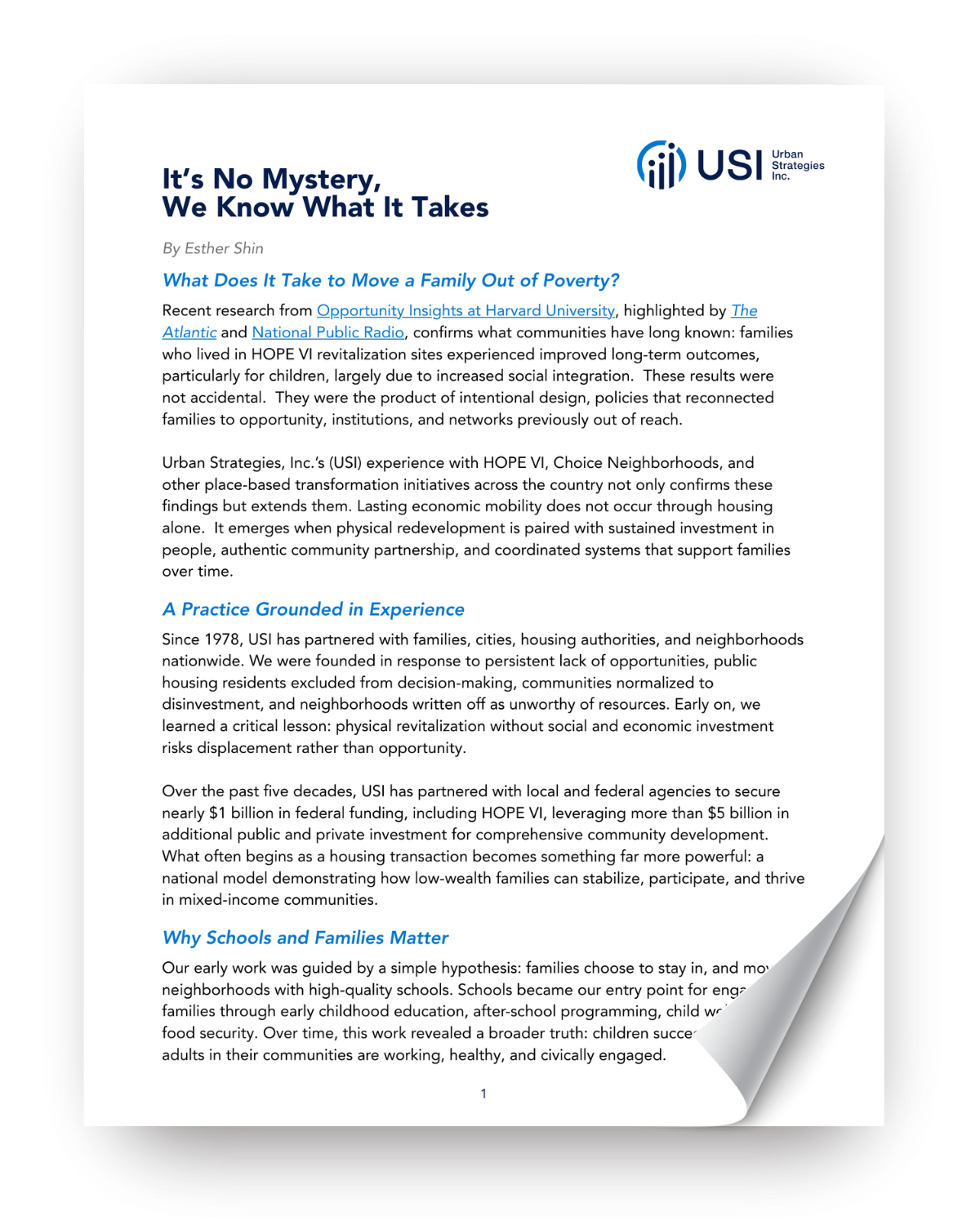
We invite you to read our response to the study, “It’s No Mystery, We Know What It Takes”, which highlights why community transformation must be rooted in love, evidence, experience, and authentic partnership.
Investing in Place - Investing in People
Register for our multi-series: “Investing in Place – Investing in People” where each month starting in March, USI will dive deeper to elevate the voices, lessons, and next steps for people-centered community economics development.
Topics will include:
- Lessons from LOVE: Resident Voices from Revitalized Communities – Hear directly from residents with lived experience in HOPE VI and Choice Neighborhood communities. This session centers the voices that matter most—sharing how trust, stability, and sustained support shapes real outcomes for families and children.
- Partnering for Impact: Aligning Investments for Greater Results – Explore how cross-sector partners align strategies, leverage resources, and move from siloed efforts to shared impact. This conversation highlights what it takes to turn collaboration into measurable, community-level outcomes.
- HOPE to Choice: Connecting the Past to the Present—and the Path Forward – This session bridges decades of practice and policy, examining what HOPE VI taught us, how Choice Neighborhoods evolved, and what must come next to sustain economic mobility and community wellbeing.
- Mixed-Income Communities: Opportunities, Tensions, and the Future of Place-Based Investment – A forward-looking conversation on the promise and complexity of mixed-income communities—examining evidence, outcomes, and the policy and practice shifts needed to ensure these communities truly work for everyone.